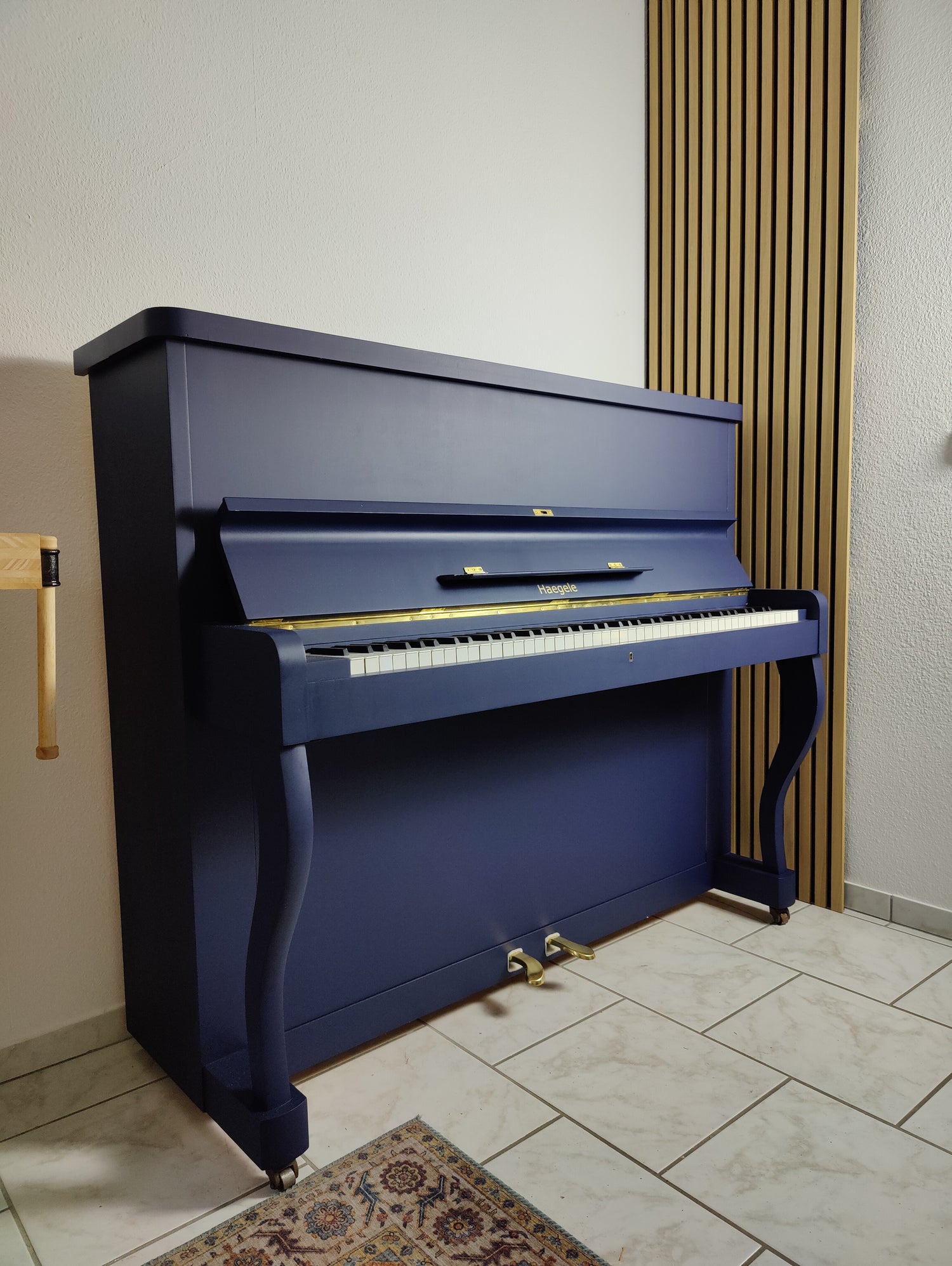
The pedals on a piano and grand piano - explained quickly and simply
Steven Reck

The pedals of a piano or grand piano are crucial for the instrument's expressiveness and sound. They enable the player to create various sound nuances and vary the playing. In this article, we explain the functions of the pedals for pianos and grand pianos to give you a better understanding.
Pedals in a Piano
A piano typically has three pedals, each fulfilling different functions:
- Right Pedal (Sustain Pedal): This pedal is the most important and most frequently used. It lifts the dampers from the strings, allowing the sound to sustain longer, even after the keys have been released. This enables the creation of harmonic sounds and smooth transitions between notes.
- Middle Pedal as (Mute Pedal): In most pianos, the middle pedal can insert a soft felt strip between the hammers and the strings. The felt makes the piano somewhat quieter. This is particularly suitable for rental apartments if you want to practice or don't want to disturb anyone. In some pianos, this function is operated not via the pedal but via a separate lever.
- Middle Pedal as (Sostenuto Pedal): This pedal is less common in pianos but very useful. It sustains only the notes that are played at the moment the pedal is pressed, while other notes are damped normally. This is particularly helpful for emphasizing specific notes in a piece.
- Left Pedal (Una Corda): This pedal shifts the hammer position closer to the strings. This makes the piano sound quieter. It supports quiet (piano) playing of softer passages.
Pedals in a Grand Piano
A grand piano also has three pedals, which fulfill similar functions to piano pedals, but with some differences:
- Right Pedal (Sustain Pedal): As with the piano, this pedal lifts the dampers from the strings and allows for a sustained sound. The difference lies in the construction of the grand piano, which often produces a fuller and richer sound.
- Middle Pedal (Sostenuto Pedal): It sustains only the notes that are played at the moment the pedal is pressed, while other notes are damped normally. This is particularly advantageous for complex pieces where certain notes need to be sustained.
- Left Pedal (Una Corda): This pedal shifts the hammer position so that a hammer strikes only 2 out of 3 strings. This makes the sound quieter and softer, creating a gentle timbre. It supports the playing of quiet (piano) passages.
In summary, the pedals in both pianos and grand pianos play an essential role in expanding musical expressiveness. Understanding their functions can help you improve your playing and discover new sound possibilities.