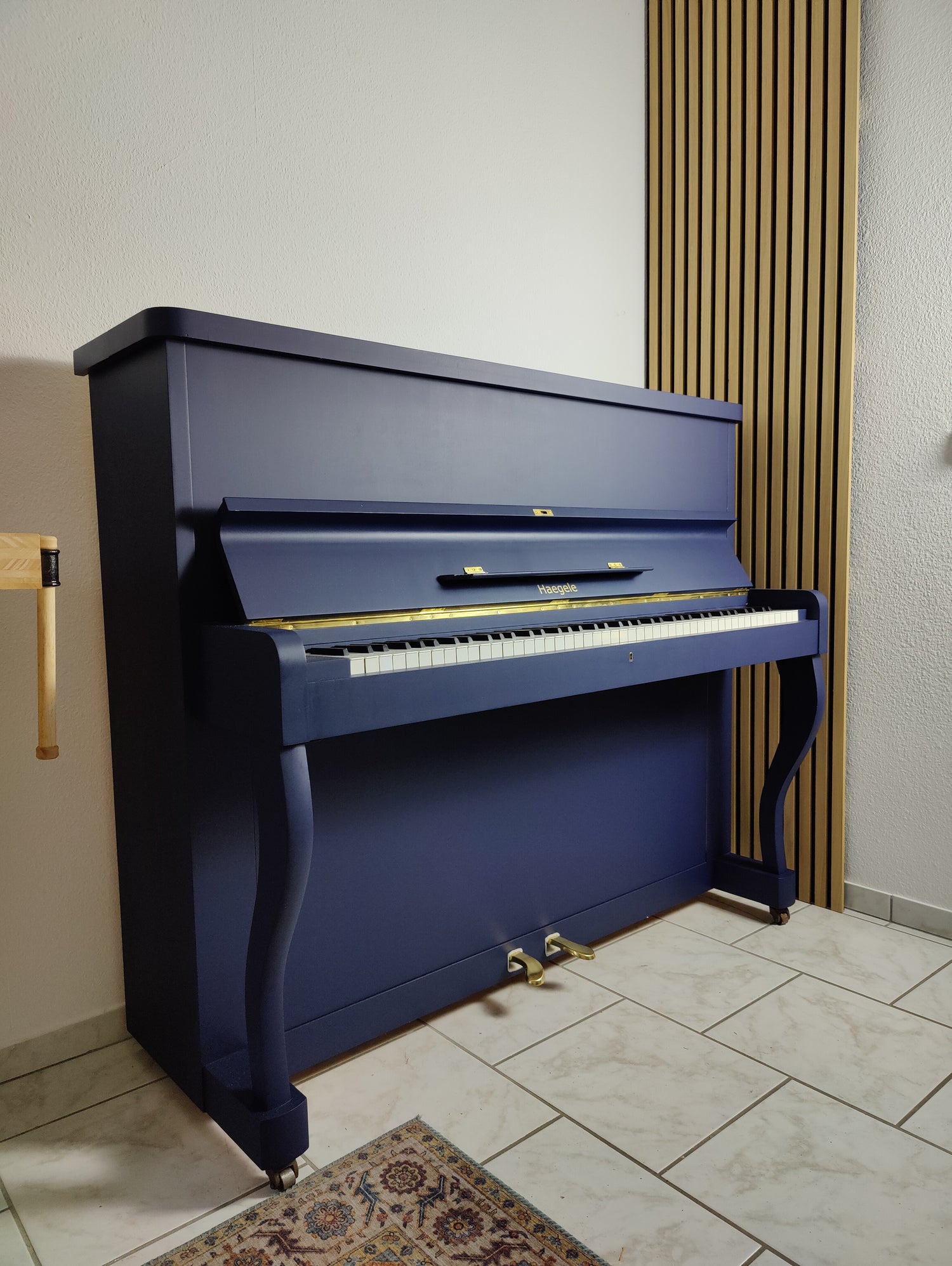
Care Instructions for Pianos and Grand Pianos
Care and Maintenance of Pianos and Grand Pianos: A Guide for Owners
As a piano builder, I know from experience how important regular and expert care of pianos and grand pianos is to preserve their sound quality and extend the instrument's lifespan. Every piano and grand piano consists of a variety of finely tuned parts that react to external influences such as temperature and humidity fluctuations.
Here are some tips for proper care:
1. Proper Tuning: A piano or grand piano should be tuned regularly to ensure the best possible sound. Generally, I recommend having the instrument tuned once or twice a year, as changes in humidity and temperature affect the tension of the strings. Precise tuning requires the trained ear of a piano tuner, who uses special tools to bring the strings to the correct pitch.
2. Climatic Conditions: Pianos and grand pianos are very sensitive to changes in room temperature and humidity. Too high or too low humidity can warp the wood and affect the tuning. An ideal constant room temperature is around 20°C and a relative humidity of 40-60%. If you want to preserve the instrument well in the long term, you should avoid strong fluctuations; use a hygrometer for control. In particularly dry months, it is advisable to use a humidifier to protect the wood from drying out and minimize fluctuations.
3. Cleaning: Regular cleaning is also a key aspect of care. I advise gently wiping the keys with a soft cloth. For heavier soiling, a slightly damp cloth can help remove dirt. For the wooden surfaces of a grand piano, a special piano polish is recommended, which not only cleans the wood but also protects and cares for it.
4. Mechanical Maintenance: The mechanics of a piano – the keys, hammers, dampers, and many other parts – must be checked at regular intervals. Here, it is important to pay attention to the wear and tear of the delicate parts. An experienced piano builder can determine whether parts need to be readjusted or replaced. This maintenance ensures that the instrument plays precisely and reliably.
5. Transport and Placement: A piano or grand piano should always be transported by professionals, as it is a sensitive instrument that can be easily damaged by improper handling. Make sure that the piano's location does not have extreme temperature fluctuations and that the instrument is not placed near heaters or windows.
With proper care and regular maintenance, you can preserve the beauty and functionality of your piano or grand piano for many years. Always pay attention to the small details, and your instrument will bring you joy for a long time.